
If your energy bills keep climbing every season, your HVAC system could be the culprit or the cure. Upgrading to energy-efficient HVAC systems is one of the smartest investments a homeowner or business owner can make. From slashing utility costs to maintaining consistent indoor comfort year-round, modern HVAC technology has transformed how we heat and cool our spaces.
At Climate Pros HC, we’ve helped hundreds of residential and commercial clients in the Hollister, CA area make the switch to smarter, more efficient climate control. This guide walks you through everything you need to know from how efficiency ratings work to when to call for emergency HVAC repair.
What Makes an HVAC System “Energy-Efficient”?
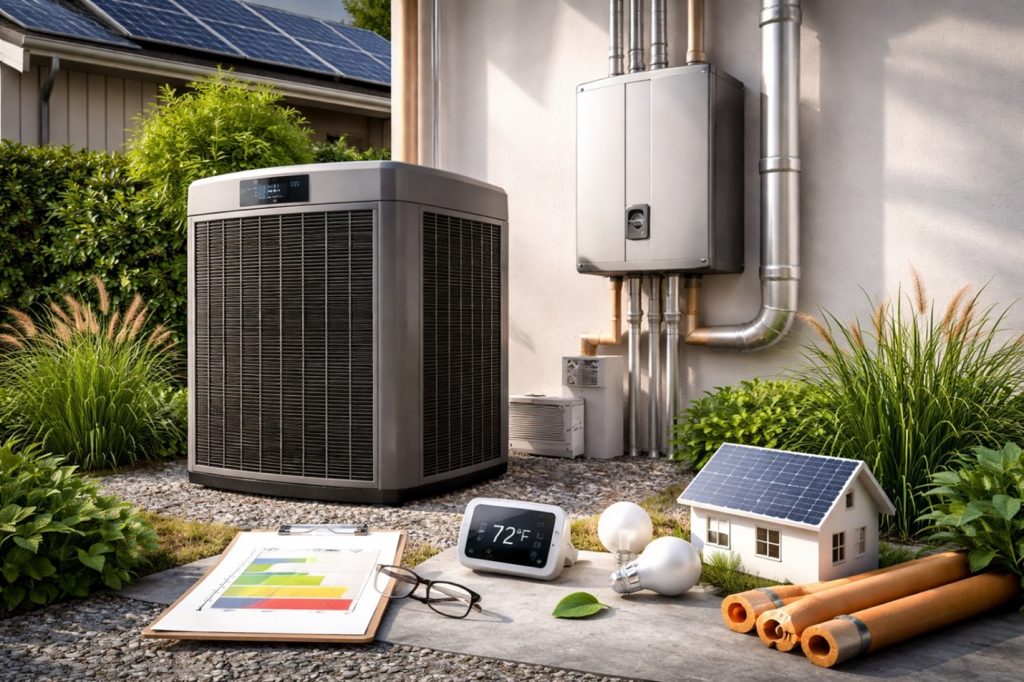
An energy-efficient HVAC system is one that delivers the same (or better) heating and cooling performance while consuming significantly less electricity or gas. The key metrics used to measure this include:
| Rating | Stands For | What It Measures | Minimum Efficient Score |
| SEER2 | Seasonal Energy Efficiency Ratio | Cooling efficiency | 14.3+ (new standard) |
| AFUE | Annual Fuel Utilization Efficiency | Gas furnace efficiency | 80%+ (high-efficiency: 90%+) |
| HSPF2 | Heating Seasonal Performance Factor | Heat pump heating efficiency | 7.5+ |
| EER2 | Energy Efficiency Ratio | Cooling at peak conditions | 11.7+ |
The higher the score, the less energy your system uses to produce the same output. Replacing a 10-SEER unit with a modern 18-SEER system can reduce your cooling costs by up to 44%, according to the U.S. Department of Energy.
Top Benefits of Energy-Efficient HVAC Systems
Switching to a high-efficiency system isn’t just about saving money it’s about upgrading your entire experience of indoor comfort. Here’s what you stand to gain:
- Lower utility bills — High-efficiency systems use 20–50% less energy than older models
- Better indoor air quality — Advanced filtration removes allergens, dust, and pollutants more effectively
- Consistent temperatures — Variable-speed technology eliminates hot/cold spots in your home or business
- Reduced carbon footprint — Less energy consumption means fewer greenhouse gas emissions
- Longer equipment life — Efficient systems run smarter, not harder, reducing wear and tear
- Higher property value — Energy-efficient upgrades are a recognized selling point for real estate
- Quieter operation — Modern compressors and blowers are significantly quieter than older units
- Eligibility for rebates — Many utility companies and the federal government offer tax credits for qualifying equipment
Energy-Efficient HVAC Options: Which System Is Right for You?
There is no one-size-fits-all answer. The best system depends on your building type, climate, and existing infrastructure. Here’s a breakdown of your main options:
1. Central Split Systems
The most common setup for homes. An outdoor compressor/condenser pairs with an indoor air handler. Modern units now come with variable-speed compressors that adjust output based on real-time need eliminating the energy waste of constant on/off cycling.
2. Heat Pumps
Heat pumps are becoming the gold standard for energy efficiency. Instead of generating heat, they move heat energy making them 2–3x more efficient than traditional furnaces in moderate climates. Cold-climate heat pumps now work effectively even below 0°F.
3. Ductless Mini-Splits
Ideal for room additions, older homes without ductwork, or commercial spaces needing zone control. Mini-splits eliminate the 20–30% energy losses that can occur in ductwork. Our HVAC specialists can assess whether a ductless setup makes sense for your property.
4. Packaged Units
Common in commercial settings, these self-contained systems house all components in one outdoor cabinet. They’re straightforward to maintain and replace, making commercial heating maintenance more cost-effective.
5. Smart/Zoned HVAC Systems
Pairing any system with a smart thermostat and zoning controls can increase efficiency by 10–20% by ensuring you only condition occupied spaces.
Commercial Heating Maintenance: Why It Can’t Wait
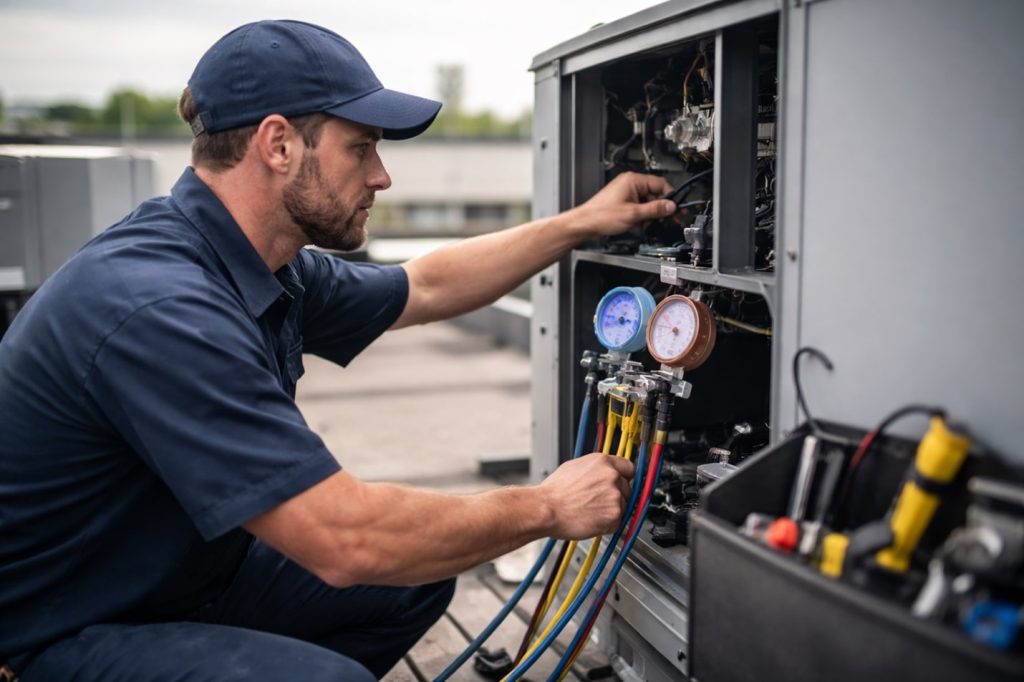
For businesses, HVAC downtime isn’t just uncomfortable it’s costly. A well-maintained commercial system keeps employees productive, customers comfortable, and energy bills predictable.
Essential commercial heating maintenance tasks include:
- Quarterly air filter inspections and replacements
- Annual heat exchanger inspection for cracks or corrosion
- Cleaning of burners, ignitors, and flame sensors
- Checking refrigerant levels and coil cleanliness
- Inspecting and sealing ductwork for leaks
- Testing thermostat calibration and controls
- Lubricating all moving parts to reduce friction losses
Regular maintenance can extend equipment life by 5–10 years and prevent 75% of HVAC breakdowns before they happen, according to ASHRAE, the leading authority in heating, refrigeration, and air conditioning engineering.
Our heating services cover comprehensive commercial and residential maintenance plans designed to keep your system running at peak efficiency all year long.
When You Need Emergency HVAC Repair
Even the best-maintained systems can fail unexpectedly. Knowing the warning signs of impending failure can mean the difference between a minor repair and a full system replacement.
Call for emergency HVAC repair if you notice:
- Complete loss of heating or cooling
- Unusual sounds banging, screeching, or grinding
- Ice forming on the refrigerant lines or evaporator coil
- Burning smells or electrical odors coming from vents
- Sudden spikes in your energy bill without a change in usage
- Water pooling around the indoor unit (could indicate a blocked condensate drain)
- Uneven temperatures across rooms or floors
Don’t wait for minor issues to become major failures. The Climate Pros HC team is equipped for rapid-response emergency HVAC repair throughout the Hollister region, minimizing downtime and discomfort.
Finding Reliable AC Repair Near Me
When you search for ac repair near me, you’re looking for more than just proximity you need a team that’s licensed, experienced, and honest. Here’s what to look for when evaluating local HVAC contractors:
| What to Check | Why It Matters |
| EPA 608 Certification | Required by law to handle refrigerants |
| State Contractor’s License | Ensures legal compliance and accountability |
| Manufacturer Certifications | Confirms training on specific equipment brands |
| Transparent Flat-Rate Pricing | No surprise charges after the job |
| Warranty on Parts & Labor | Protects your investment |
| Online Reviews (Google, Yelp) | Real-world track record from local customers |
If you’re weighing whether to repair your existing unit or replace it, our detailed breakdown in AC Installation vs. AC Repair Near Me will help you make the most cost-effective decision.
Climate Pros Heating and Cooling: A Smarter Approach to HVAC
The idea of climate Pros heating and cooling goes beyond simply installing equipment. It’s about designing a complete climate strategy for your space one that accounts for insulation, sun exposure, occupancy patterns, and local weather.
A climate approach asks:
- Is your home or building properly insulated to retain conditioned air?
- Are your windows and doors sealed against drafts?
- Does your HVAC system have the right capacity (not oversized, not undersized)?
- Are your ducts properly sized, sealed, and insulated?
- Is your thermostat smart enough to learn your patterns?
When all these factors are optimized together, you can achieve maximum comfort at the lowest possible energy cost. Our team provides complete system assessments to identify where your biggest efficiency gains are hiding.
For homeowners in the area, our Complete Guide to HVAC in Hollister, CA is a great starting point for understanding your local climate challenges and solutions.
Why Professional Installation Matters as Much as Equipment
You can buy the highest-efficiency HVAC system on the market and still waste money if it’s installed incorrectly. Studies show that improper installation can reduce system efficiency by 30% or more.
Common installation mistakes that hurt efficiency include:
- Oversizing the system (causes short-cycling, humidity problems, and premature wear)
- Undersizing the system (system runs constantly without reaching setpoint)
- Poor duct design or installation
- Incorrect refrigerant charge
- Inadequate airflow across the evaporator coil
This is why choosing the right installer is just as important as choosing the right equipment. Read our expert take on Why Choosing HVAC Experts for Air Conditioning Installation matters for your long-term ROI.
For additional guidance on efficiency standards and rebate programs, the ENERGY STAR program by the U.S. EPA is an authoritative resource their certified products list is a reliable starting point when shopping for new equipment.
Frequently Asked Questions About Energy-Efficient HVAC System
What is the most energy-efficient HVAC system available today?
Heat pumps particularly variable-speed inverter-driven models are currently the most energy-efficient HVAC option available. Air-source heat pumps with a SEER2 rating above 18 and HSPF2 above 9 can deliver exceptional efficiency in most North American climates. Ground-source (geothermal) heat pumps are even more efficient but require a higher upfront investment.
How much can I save by upgrading to an energy-efficient HVAC system?
The savings depend on your current system’s age and efficiency rating. Replacing a 10-SEER system with a 20-SEER system can cut cooling costs by up to 50%. Most homeowners recoup the cost of a new high-efficiency system in energy savings within 5–8 years, and federal tax credits (up to 30% under the Inflation Reduction Act) can shorten that payback period significantly.
How often should I schedule commercial heating maintenance?
Commercial HVAC systems should receive professional maintenance at minimum twice a year once before the heating season and once before the cooling season. High-use systems (restaurants, retail, medical facilities) may benefit from quarterly inspections to catch issues early and ensure compliance with air quality standards.
What are the signs that I need emergency HVAC repair?
You need emergency HVAC repair if you experience a complete system failure, burning smells from vents, ice buildup on refrigerant lines, unusual loud noises such as banging or grinding, or water leaking from the indoor unit. In extreme weather conditions, HVAC failure is a health risk especially for elderly residents or young children and should be treated as an urgent repair.
Is it better to repair or replace my AC unit?
A general rule of thumb in the HVAC industry is the “5,000 rule”: multiply the age of your unit by the repair cost. If the result exceeds $5,000, replacement is typically the better financial decision. Additionally, if your system is over 10–12 years old, uses R-22 refrigerant (now phased out), or requires repairs costing more than 50% of a new system’s price, replacement with a modern energy-efficient unit is almost always the smarter investment.
Ready to Upgrade Your HVAC System?
Whether you need emergency HVAC repair, a seasonal tune-up, or a full system replacement, the Climate Pros HC team is ready to help. We serve residential and commercial clients throughout Hollister and the surrounding area with honest assessments, expert installations, and responsive service.
Contact Climate Pros HC today to schedule your free consultation and find out how much you could save with an energy-efficient upgrade.